

Have you ever come across individuals who look so alike that you wonder if there is any family connection between them? Indeed, facial similarity is something quite powerful, and it can happen regardless of whether or not two individuals have a common biological origin. A facial recognition service can assist in analysing such similarities through the analysis of facial features and facial proportions. This manual will provide information on why there might be facial similarities between individuals with no relation at all, how facial similarity is calculated, what circumstances can influence the outcome of the analysis, and why facial similarity should not be considered the basis for making any assumptions on the genetic connection.
Table Of Content
Why Do Unrelated People Look Alike?
Human faces are built from many of the same basic structures, including the eyes, nose, lips, jaw, forehead, and cheekbones. Because there are countless possible combinations of these features, unrelated people can occasionally end up with remarkably similar facial characteristics.
Genetics also plays a role. Relatives may inherit similar facial traits from common ancestors, while unrelated individuals can independently develop similar combinations of features.
Research into automated face similarity shows that measuring whether two faces look alike is different from determining whether they belong to the same person.
How Does Facial Similarity Testing Work?
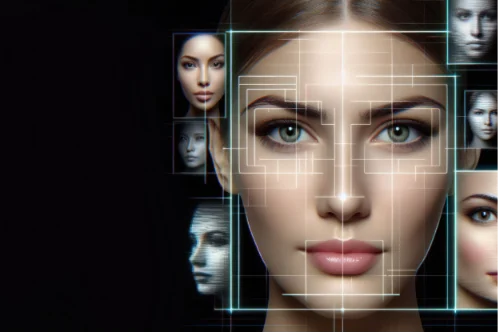
Facial similarity testing uses modern image-analysis systems that can identify specific points and proportions on a face before comparing them with another photograph. Depending on the service, these measurements may include eye spacing, nose shape, jawline, chin structure, facial symmetry, eyebrows, lips, and overall face shape.
A facial recognition analysis service can then produce a similarity estimate based on the visible characteristics in the submitted images.
However, results depend heavily on image quality. Different lighting, camera angles, facial expressions, age, hairstyles, and obstructions can influence the comparison. For a meaningful comparison, clear, front-facing photographs with minimal shadows and filters are preferable.
Can Facial Similarity Prove a Family Relationship?
No. Facial resemblance cannot scientifically establish paternity, maternity, sibling relationships, or another biological connection.
A facial comparison can show that two people have similar visible features, but DNA testing examines genetic material directly. Therefore, treating facial comparison as a face-matching DNA alternative would be misleading when biological confirmation is required.
For example, a child may strongly resemble a particular parent while sharing fewer obvious features with the other. The opposite can also happen. Appearance alone is not a reliable way to determine biological parentage.
What Does a Face Comparison Report Include?
Useful reports on face comparisons provide more information than just a percentage of similarity between two faces. They may indicate many similarities in some elements of the face, eyes, nose, lips, jawline, forehead, etc. They may also include differences that provide a more complete picture of the comparison to the reader.
This data should be considered purely informative and cannot be used as any sort of medical, legal, or genetic proof of anything.
Choosing a Reliable Facial Recognition Service
Before using the service, consider the manner in which it describes methodology, deals with the submitted photos, provides results, and informs the user about limitations of face comparison. Privacy is especially critical, as the faces of people are considered private information. It may be a good idea to verify whether the service makes a clear difference between visual and DNA-based comparisons.
Facilities such as Face DNA Test, located in New Mexico, provide facial comparison services that analyse visible features such as face shape, eye spacing, nose, lips, jawline, and chin. Its services include parent-child, sibling, grandparent, aunt/uncle, cousin, and ancestry face comparisons, providing visual similarity reports for informational and personal use.
Final Thoughts
Humans may resemble one another very closely due to the genetic and anatomical influences on facial traits, but even the random matching of features may yield identical faces too. A facial recognition service may facilitate such visual comparisons, but it will not take the place of a genetic test when biological evidence is required.
In case you wonder why two humans appear to look alike, it could be an intriguing beginning of an analysis of their faces, but in case your question involves any biological or legal relationship, DNA testing at the lab should follow next.