

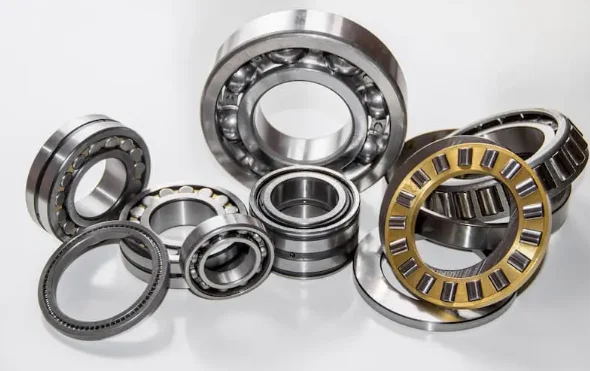

Industries that run heavy equipment depend on predictable components. Bearings fall into that category not because they are simple, but because the margin of error around them is razor thin. When a bearing collapses, everything around it pays the price — shafts, housings, production schedules, even operator safety. A handful of tapered bearing manufacturers earn respect not through slogans but through parts that stay alive under loads that should have crushed them. The separation between the serious players and the crowd is sharper than most realize.
Table Of Content
- Materials That Don’t Break Under Demanding Cycles
- Grinding Work That Separates Precision from Guesswork
- Controlled Assembly Environments That Leave No Loose Ends
- Testing That Reveals Weakness Before the Customer Finds It
- End-to-End Manufacturing Control
- Adaptation for Harsh Industrial Territories
- Digital Oversight Without Turning Manufacturing into Guesswork
- Engineering Support That Solves Real-World Problems
- Why These Manufacturers Earn the Trust They Do
- Conclusion
Materials That Don’t Break Under Demanding Cycles
Reliable bearings don’t start at the machine shop; they begin in the furnace. When the steel isn’t right, nothing that happens afterward can save it. The top makers depend on controlled alloy mixes that hold tight grain structures even after thousands of cyclic loads. There’s nothing glamorous about it — just hard metallurgy that refuses compromise.
Heat treatment becomes the make-or-break stage. The best manufacturers treat it like a science lab. Temperature ramps follow strict profiles. Quenching cycles are dialed to stabilize hardness without turning the metal brittle. Every batch gets tracked. Every shift change gets logged. That discipline is what keeps inner rings and rollers from developing hairline fractures that grow silently until a bearing dies mid-operation.
Grinding Work That Separates Precision from Guesswork
Machinery doesn’t forgive sloppy tolerances. Bearings certainly don’t. The difference between the average producer and the high-end maker appears quietly on the grinding line. That’s where rollers get shaped to profiles that distribute pressure evenly instead of concentrating it at one point.
In top-tier facilities, grinding stations run with their own monitoring systems. Operators don’t just check diameter; they inspect micro-roundness, taper angle consistency, and surface finish. A roller with slight convex deviation can push load toward the edge, triggering heat spikes. That’s how premature failure starts, and the elite manufacturers avoid that by refusing to ship anything that doesn’t hit their internal thresholds — often tighter than the industry standard.
Controlled Assembly Environments That Leave No Loose Ends
Assembly is usually treated as the “simple part.” That’s where average-quality bearings get dragged down. Dust particles, microscopic shavings, even imperfect lubrication distribution — these small contaminants cut years off a bearing’s life.
The high-end tapered bearing manufacturers take contamination so seriously that many operate cleanroom-style zones. Every roller is matched by weight and diameter so load spreads smoothly. Lubrication isn’t just applied but measured. Preload isn’t eyeballed; it’s set through calibrated systems that leave zero room for human guesswork. That’s why bearings from these manufacturers show fewer early-life failures, even under chaotic operating conditions.
Testing That Reveals Weakness Before the Customer Finds It
No marketing line can hide the truth once a bearing reaches the test bench. High-grade producers push their bearings through cycles that mimic real industrial punishment — fluctuating loads, high RPM surges, temperature oscillations. Destructive tests take it further, intentionally pushing bearings until something gives. These aren’t rituals; they’re feedback loops. The data tells them whether the heat treatment was stable, whether the grinding was consistent, whether the lubricant film held under pressure.
This kind of testing weeds out the flawed pieces before they ever touch a shipping crate. And more importantly, it exposes weak points in the process so the next batch doesn’t repeat the same mistakes.
End-to-End Manufacturing Control
Many manufacturers outsource one or two critical processes — forging, heat treatment, or roller grinding. That shortcut often introduces irregularities that slip through. The premium producers build the entire process under their own roof. Vertical integration is their biggest advantage.
When forging, machining, heat treatment, finishing, and assembly stay within one facility, the feedback loop becomes immediate. A defect spotted at final inspection triggers a corrective adjustment upstream within hours, not weeks. That tight system is the backbone behind consistent performance in industries where bearings are expected to run years without hiccups.
Adaptation for Harsh Industrial Territories
Industries don’t stress bearings equally. Railways, mining, heavy transport, agriculture, wind turbines — each environment carries its own threats. High temperatures. Mud. Shock loads. Vibration. Corrosive atmospheres. Misalignment risks.
The elite tapered bearing manufacturers don’t push single-solution catalog products. They tune their components based on the environment. Wind turbines get optimized roller geometry for axial stability. Mining trucks demand reinforced inner rings. Rail axles need long-duration heat resistance with sealing elements that keep out abrasive grit.
This kind of specialization doesn’t come from guesswork. It comes from long-standing relationships with operators in these industries, conversations about failures, and a steady evolution of the bearing design with each iteration.
Digital Oversight Without Turning Manufacturing into Guesswork
Modern bearing production blends old principles with new tools. In the top factories, sensors line the machines, capturing vibration signatures, temperature deviations, and tool-wear data in real time. Digital models simulate how a slight tolerance shift could affect long-term load distribution.
This isn’t automation for the sake of automation. It’s a safety net that catches inconsistencies early before they travel downstream. The result is a manufacturing line that behaves the same on a Monday morning as it does on a Saturday night shift.
Engineering Support That Solves Real-World Problems
Anyone can sell a bearing. Only a few can help a plant fix a recurring breakdown pattern.
The leaders provide engineering input that goes beyond catalog pages. Shaft fit issues, lubrication path problems, misalignment tendencies, housing distortion — they analyze these things firsthand. Solutions often involve subtle changes: different roller profiles, improved cage designs, modified preload settings.
This collaboration gives industrial operators bearings tailored to the exact forces and conditions they face, not generic parts that “should work.”
Why These Manufacturers Earn the Trust They Do
In high-stakes sectors, a bearing’s failure isn’t a minor inconvenience. It’s downtime. It’s a stalled truck on a highway shoulder. It’s a conveyor line backing up. It’s a turbine losing efficiency. High-grade manufacturers deliver components that stay stable, run cooler, handle misalignment better, and resist wear for longer intervals. That reliability becomes an asset far more valuable than the initial cost of the component.
That’s why a select group of tapered bearing manufacturers sits at the top of the global supply chain. They don’t compete on shortcuts. They compete on consistency, metallurgy discipline, technical transparency, and an obsession with real-world performance rather than brochure promises.
Conclusion
High grade tapered bearings don’t stand out because of branding or fancy packaging. Their strength comes from decisions made deep inside the factory — in metallurgy labs, on grinding floors, during assembly and through continuous testing cycles that most manufacturers never invest in. The companies that rule this space get there by delivering parts that hold their shape, carry uneven loads without breaking rhythm and stay reliable when conditions get rough. That’s not an accident, it’s discipline, precision and an unbroken chain of quality practices. That’s what sets the tapered bearing manufacturers apart and why their parts anchor the world’s toughest industrial systems.