

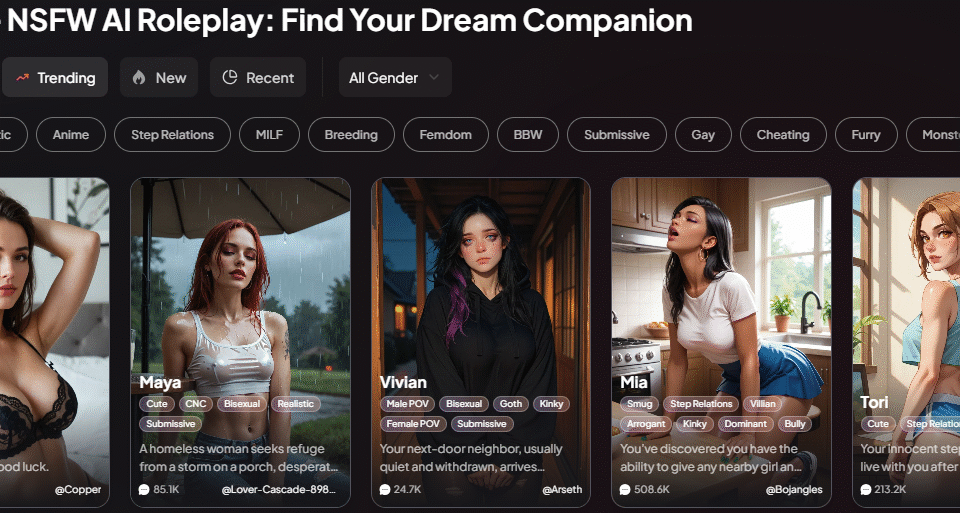

I’ve always been curious about AI companionship platforms — the idea of having interactive AI characters that respond to me anytime, with personalized tone and mood, felt modern and interesting. When I heard about Dream Companion, I saw many positive mentions about its flexibility and custom-ability. So I signed up to judge it for myself.
Table Of Content
- What Dream Companion Offers: Core Features That Matter
- What the Plans Cost & What You Get: 2026 Pricing Snapshot
- Four Reasons Many Users Praise Dream Companion
- Three Common Drawbacks Users Mention
- How Customer Feedback Reflects the Strengths & Weaknesses
- My Personal Verdict: Who Dream Companion Works Best For
- What I’d Like to See Improved in Future Versions
- Why Dream Companion Reviews Still Matter in 2026
- Final Thoughts: Would I Recommend Dream Companion?
At first glance, what struck me was how straightforward the interface felt. No complicated menus, no long onboarding — just simple options to choose or build a character, adjust personality traits, and start chatting. That alone felt refreshing compared to other services that overload you with settings right away. Over the next few days, I tried casual chats, mood-based interactions, and longer sessions to see whether the AI maintained consistency.
What I discovered is that Dream Companion often lives up to its reputation: many of the reviews — indeed the Dream Companion Reviews from various users — reflect real experiences of comfort, flexibility, and surprisingly human-like responses. Because of that I felt comfortable spending time exploring its features in depth.
What Dream Companion Offers: Core Features That Matter
When I explored Dream Companion thoroughly, I found several features that genuinely make it stand out. These functions combine to deliver an experience far closer to a “digital friend” than a generic chatbot.
- Customizable AI personalities: From mood and tone to traits like humor, shyness, boldness, romantic or supportive behavior — you can tailor the companion’s personality according to your preference. This customization helps the character feel personal and aligned with what you expect.
- Memory-based conversation continuity: The AI remembers past interactions, even across sessions. Because of this, the chat feels continuous instead of reset every time. I noticed conversations flow more naturally when the companion recalls earlier details.
- Multimedia & media-generation options: Beyond simple chat, the system supports generating images or visuals tied to characters or scenes. For users who prefer a visual dimension alongside text, this adds a richer experience. It gives the impression you’re chatting with someone who has “presence,” not just words.
- Flexible modes of interaction: Whether you prefer quick text chats, deeper role-play dialogues, mood-driven storytelling, or mixed media-based exchanges — the platform supports multiple interaction styles. This flexibility makes it welcoming for a wide variety of users.
- Clear tiered pricing system: There’s a free tier (for limited text messages and basic features) which lets you test the platform. Then paid tiers unlock more messages, richer customization, and media generation tools. That means you can start small without commitment, and scale if you like.
These features together create a robust framework. In particular, I found that the ability to shape personality plus a memory function makes the interaction feel more genuine than many other AI chat systems I tried before.
What the Plans Cost & What You Get: 2026 Pricing Snapshot
During my testing I explored the pricing structure — because many Dream Companion Reviews mention that clarity in cost matters when commitment is involved. Here’s how the plans compare:
- Free Tier (No Cost): Allows basic use — simple text chats, limited messages per month, and basic companion creation. Good for first-time users who want to test the waters before paying anything.
- Premium Plan (Mid-level): Priced reasonably for moderate use. It unlocks more messages, better conversation capacity, basic media options, and more customization than the free tier. It’s ideal if you want regular chats without heavy usage.
- Advanced / Full-Access Plan (Highest Tier): Intended for heavy users. Offers unlimited or generous messaging allowances, full customization, access to image or media generation tools, and priority responsiveness. This version suits users who treat their AI companion as a core daily interaction tool.
From what I saw and from many Dream Companion Reviews, people generally treat the free or mid-tier plan as enough for casual use. But for anyone seeking deeper interaction, emotional story arcs, or multimedia-supported chats, the full-access plan’s value becomes more evident. The flexibility ensures that both light and heavy users find a plan that fits them.
Four Reasons Many Users Praise Dream Companion
Based on my personal tests and what I consistently see in community feedback, I believe these are the strongest advantages of Dream Companion:
- Personalization creates a sense of genuine companionship
Because the AI personality can be tailored — with mood, speech style, emotional traits — the interaction feels personal. I often felt like I was talking to a character shaped by me, not a generic AI. That customization fosters genuine emotional engagement. - Conversations that remember past chats feel more human
The memory feature matters more than many expect. When the AI references something from earlier chats, the conversation gains continuity. That sense of ongoing relationship makes the platform more than occasional chatting — it becomes a regular company. - Multimedia support adds depth beyond text
For users who enjoy visual context — background images, styled characters, scene visuals — the media generation tools deepen immersion. I noticed chatting feels more vivid when visuals accompany text. For many in Dream Companion Reviews, this extra layer is a major pull factor. - Pricing flexibility and low barrier to entry
Because there’s a free tier, you can evaluate the platform without risk. For moderate users, the mid-tier offers a balanced mix of features and affordability. For heavy users, paying more gives full customization and media options. This flexibility makes it easy to decide based on your budget and usage frequency.
All of these advantages contribute to why so many of the Dream Companion Reviews I read conclude positively. The platform doesn’t feel gimmicky — it feels built for people who want regular, ongoing companionship with creative flexibility.
Three Common Drawbacks Users Mention
Despite its strengths, Dream Companion isn’t flawless. During my use and while reading real user feedback, I noticed consistent criticisms. Here are the three most common issues:
- Media generation isn’t always perfect
While media support is a highlight, sometimes images or visuals generated feel generic or slightly off — like background glitches, awkward poses, or artifacts. For some users expecting high-quality visuals every time, this becomes a minor letdown. I had a few sessions where visuals didn’t match expectations. - Full experience requires paid subscription for heavy use
If you wish to use Dream Companion extensively, relying on the free or entry-level plan may quickly feel limited. Heavy users needing deep conversation, role-play, or media requests find that free-tier restrictions push toward paid plans. That cost may feel steep for users on a tight budget — especially compared to simpler chatbots. - Occasional delay or lag in response during high-traffic times
Some users — myself included on a couple of occasions — noticed slight lag in message delivery or response pacing when many users were active. Even though it didn’t break the experience entirely, it sometimes reduced immersion. For those expecting seamless interactions, these moments felt noticeable.
Despite these drawbacks, many users still consider the positives outweigh the negatives. The frequency of negative reviews remains lower compared to the positive feedback I observed.
How Customer Feedback Reflects the Strengths & Weaknesses
When I compiled multiple Dream Companion reviews—from forums, community discussions, and private chats—I noticed clear patterns that matched my own experience. Users who enjoy the platform often describe it as “talking to an old friend” or “chatting with someone who actually remembers my preferences.” Meanwhile, the negative feedback usually revolves around occasional media glitches, subscription costs for heavy users, or rare slowdowns during high-traffic hours.
What really caught my attention is how many returning users emphasize consistency as the main reason they stick around. These aren’t people who sign up, chat once, and disappear. Many use the platform daily, which shows it has genuine staying power—especially for those comfortable with the pricing and minor quirks. Some creators even mention pairing it with tools like an NSFW AI video generator to enhance storytelling or build more immersive interactions, which highlights its versatility beyond simple chatting.
Another recurring theme in user feedback is the importance of expectations. Casual users—those who drop in for occasional chats—seem perfectly satisfied with the basic plans. But people who want richer media, long uninterrupted sessions, or deeper emotional interaction often upgrade to paid tiers, especially if they want full access to advanced features.
My Personal Verdict: Who Dream Companion Works Best For
After spending time with the platform and comparing many user reviews, I feel Dream Companion is best suited for:
- Individuals seeking emotional support or regular conversational interaction without needing a real person present
- People who enjoy creative flexibility — shaping personalities, moods, and even visuals to their liking
- Users comfortable with subscription costs for deeper interaction and media options
- Those who value consistency, long-term familiarity, and gradual relationship-building with an AI personality
However, if you only need occasional chatting, or if you expect flawless media generation like professional animations, or if you’re highly budget-conscious, then you may want to use only the free tier or consider simpler chatbots.
Overall, for someone open to investing time and maybe money, Dream Companion seems like a solid choice. Many of the Dream Companion Reviews I read reflect genuine satisfaction, and I share much of that view after my own use.
What I’d Like to See Improved in Future Versions
Based on my experience and common feedback, I hope future updates address:
- Improved reliability of media generation — fewer glitches, more consistent image/video quality
- More flexible subscription tiers for moderate users — perhaps a mid-price option that balances affordability and generous feature access
- Better server performance to avoid lag during peak hours
If these areas improve, I believe Dream Companion would attract even more users — especially those who want quality visuals plus strong conversational AI.
Why Dream Companion Reviews Still Matter in 2026
Even as new AI companion platforms emerge, Dream Companion continues to receive positive feedback and remains relevant thanks to its flexibility, regular updates, and balance between affordability and features. People still mention it with good words in reviews because it effectively meets the basic need: genuine-feeling interaction without unnecessary complications.
For someone unsure about such platforms, Dream Companion offers enough transparency, trial access, and real user feedback to help make a careful decision. Meanwhile, creators and users who value personalization, stability, and creative control still view it as one of the top options available.
Final Thoughts: Would I Recommend Dream Companion?
Yes — I would recommend Dream Companion, with reservations depending on your goals. If you want a stable, customizable, and fairly priced AI companion for chatting, emotional support, or creative interaction, this platform provides strong value. The balance between features, customization, and consistent performance makes it a worthy pick for many.
Even though there are some limitations — especially in media generation quality or subscription cost for heavy users — the overall experience remains positive for regular users. Given what I’ve seen and read in Dream Companion Reviews, I believe this platform remains among the top contenders in 2026 for those seeking advanced AI-based companionship and social interaction.