

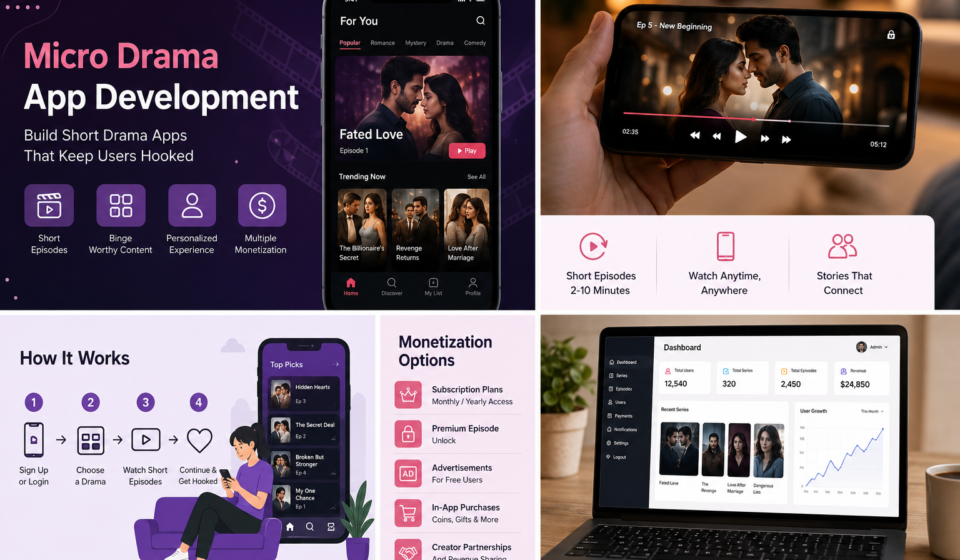

Short videos changed the way people watch content. Now, a new format is getting more attention: short drama episodes. Viewers can watch a story in a few minutes while travelling, waiting, or taking a quick break. This is why micro drama app development has become a practical business idea for startups and media companies.
Table Of Content
- Why Micro Drama App Development Is Becoming a Business Opportunity
- How a Micro Drama App Works for Modern Viewers
- Features That Make a Short Drama App Useful
- Quick User Registration
- Smart Content Categories
- Smooth Video Streaming
- Episode-Based Navigation
- Continue Watching
- Search and Filters
- Watchlist and Favorites
- Push Notifications
- Admin Panel
- Planning the Content Before Starting Development
- Monetization Models for a Micro Drama App
- Subscription Plans
- In-App Purchases
- Advertising
- Premium Episode Unlocks
- Creator Partnerships
- How White Label Technology Can Help Startups
- Custom App or Ready-Made Solution: Which One Fits?
- What It Takes to Build a Micro Drama App
- Business and Feature Planning
- UI and UX Design
- App Development
- Video and Backend Setup
- Testing
- Launch and Updates
- Common Mistakes Businesses Make
- How Pre Build Apps Can Support Your App Idea
- Practical Tips for a Better Short Drama Platform
- Final Thoughts on Micro Drama App Development
- FAQs About Micro Drama App Development
- 1. What is micro drama app development?
- 2. How much does micro drama app development cost?
- 3. How long does it take to build a micro drama app?
- 4. What features should a micro drama app have?
- 5. Can I monetize a micro drama app?
- 6. Is a white label solution suitable for micro drama app development?
- 7. Can I add different drama genres to the app?
- 8. Can users watch micro drama episodes on different devices?
- 9. How can I improve user retention in a micro drama app?
- 10. Can Pre Build Apps help with micro drama app development?
The demand is not only about short videos. People want stories that move fast. They want a reason to watch the next episode. We see this in many short drama platforms where each episode ends with a small twist or a question. That simple habit can bring users back every day.
But creating this type of app is not just about adding a video player. You need the right content structure, app features, monetization plan, and technical setup. In this article, we will look at how micro drama app development works, what features matter, and how businesses can build a strong short-drama platform without making the process too complicated.
Why Micro Drama App Development Is Becoming a Business Opportunity
People do not always have time to watch a full movie or a 45-minute episode. Short drama fits into their daily routine. A user may watch one episode during lunch and continue the story later in the evening.
This is one reason micro drama app development is getting attention from founders. The format is easy to consume, and the episode-based structure creates regular viewing habits. Similarly, businesses can create different content categories for different audiences.
For example, a platform may publish:
- Romance dramas
- Family stories
- Mystery series
- Crime-based short dramas
- Comedy episodes
- Youth-focused stories
The content can be created for a specific market. A startup targeting the USA may focus on English-language stories. Another business may create regional content for a specific audience.
However, content quality still matters. Short does not mean careless. Every episode needs a clear purpose. Even a five-minute story should make viewers feel something.
How a Micro Drama App Works for Modern Viewers
The basic idea is simple. A user opens the app, finds a drama series, and starts watching short episodes. They can continue the story episode by episode.
Most apps follow a similar viewing journey:
- The user creates an account or continues as a guest.
- The app shows recommended drama content.
- The user selects a series.
- Episodes start playing through a video player.
- The next episode is suggested after watching.
- The user can save, like, or share the series.
This process looks simple from the outside. But good micro drama app development focuses on making each step quick. Users should not face too many screens before watching a video.
I personally think the first few minutes are very important. If the app feels slow or confusing, users may close it before watching the first episode. So, the app needs a clean home screen and fast content access.
Features That Make a Short Drama App Useful
A short drama platform needs more than a basic video player. The following features can help create a better viewing experience.
Quick User Registration
Users should be able to sign up with email, phone number, or social login. A guest viewing option can also be useful for first-time visitors.
The goal is simple. Do not force users to fill a long form before they see the content. Registration can happen when they want to save a series or access premium episodes.
Smart Content Categories
A good category system helps users find content faster. You can divide dramas by genre, language, popularity, or new releases.
For example, a viewer who enjoys romance should not need to scroll through crime and comedy content. Small details like this can improve the overall experience.
Smooth Video Streaming
Video streaming is the main part of micro drama app development. The player should support fast loading and different screen sizes.
Adaptive streaming is useful because every user has the same internet speed. One viewer may use fast Wi-Fi. Another may be watching through mobile data. The app should adjust video quality when needed.
Episode-Based Navigation
Users should easily see watched and unwatched episodes. A simple progress bar can show where they stopped.
Likewise, the next episode should be easy to find. Nobody wants to search through the entire series after watching an episode.
Continue Watching
This feature is almost expected today. If a user leaves an episode halfway, the app should remember the position.
It sounds like a small feature. But it saves time and makes the app feel more personal.
Search and Filters
Search helps users find a specific drama or actor. Filters can be based on:
- Genre
- Language
- Release date
- Popularity
- Free or premium content
Watchlist and Favorites
Users may find a series but not have time to watch it immediately. A watchlist gives them a simple way to save it.
In the same way, favorites can help viewers keep track of stories they like.
Push Notifications
Notifications can remind users about new episodes. However, too many notifications can annoy people.
A better approach is to send useful updates, such as a new episode from a series the user already watches. Admittedly, this requires some planning.
Admin Panel
The admin panel is important for the business team. It can help admins manage:
- Drama series
- Episodes
- User accounts
- Subscription plans
- Payment records
- Banners
- Notifications
A strong admin system makes daily content management easier.
Planning the Content Before Starting Development
Many founders start with app features. But I think content planning should come first. The app is only a platform. The stories are what bring viewers back.
Before starting micro drama app development, decide what type of content the platform will publish. Will the app focus on romance? Will it have different genres? Will you create original dramas or work with content creators?
You should also plan episode length. Some businesses may prefer 2 to 5-minute episodes. Others may choose 10-minute episodes. There is no single answer for every audience.
A simple content plan can include:
- Target audience
- Drama genres
- Episode length
- Number of episodes per series
- Release frequency
- Free and premium content
For example, a startup may release one free episode daily and offer early access to premium subscribers. This gives users a reason to return.
Monetization Models for a Micro Drama App
A micro drama platform needs a clear way to earn revenue. The best model depends on your audience and content strategy.
Subscription Plans
Users pay a monthly or yearly fee to access premium content. This model works well for platforms with a regular content schedule.
You can offer different plans based on video access or ad-free viewing.
In-App Purchases
Some apps allow users to unlock individual episodes. This may suit viewers who do not want a monthly subscription.
Advertising
Free users can watch ads before or during content. The platform earns revenue from ad placements.
Still, ads should not make the viewing experience frustrating. Too many interruptions may push viewers away.
Premium Episode Unlocks
A series can include free episodes and locked episodes. Users can pay to unlock the next part of the story.
This model is popular because viewers often want to know what happens next. The story itself creates the buying reason.
Creator Partnerships
Businesses can also work with writers, actors, or content creators. In comparison to producing every series internally, partnerships may help create a wider content library.
How White Label Technology Can Help Startups
Building an app from the ground up can take time. A white label solution can be a faster option for businesses that want to launch a platform under their own brand.
With a ready-made system, a business can start with core features and adjust the product according to its audience. This is one reason some founders consider a white label ai companion app provider when they are comparing ready-made app business models and technology options.
However, a short drama app still needs its own content and product planning. White label technology does not replace business decisions. You still need to choose your audience, content style, and revenue model.
In my view, the biggest benefit is speed. A startup can spend less time building basic functions and more time working on content and marketing.
Custom App or Ready-Made Solution: Which One Fits?
This is a common question during micro drama app development. The right answer depends on your budget, timeline, and business goals.
A custom app may be a better choice when you need unique features. For example, you may want a special storytelling format or a highly customised recommendation system.
A ready-made solution can work well when you want to launch faster. It may include common features such as user management, video streaming, and content controls.
Here is a simple comparison:
| Factor | Custom App | Ready-Made Solution |
| Development time | Usually longer | Usually shorter |
| Initial cost | Often higher | More manageable |
| Customisation | High | Depends on the solution |
| Launch speed | Slower | Faster |
| Feature setup | Built from scratch | Core features may already exist |
Many startups start with a ready-made solution and add more features as their audience grows. That can be a practical path.
What It Takes to Build a Micro Drama App
The development process usually includes several stages. Each stage has a purpose.
Business and Feature Planning
First, define the business model and app features. Do not add every feature you see in another app. Some features may not be useful for your audience.
UI and UX Design
The design should make content easy to find. A clean home page, simple navigation, and visible episode controls can make a big difference.
App Development
Developers then build the user app and admin panel. The technology stack depends on the platform and feature requirements.
Video and Backend Setup
Video storage and streaming need proper planning. The backend should also handle user data, content records, and subscription details.
Testing
Testing should cover different devices and network conditions. The team should check video playback, login, payments, and notifications.
Launch and Updates
After launch, the work does not stop. User feedback can show which features need improvement. We often see that real users suggest changes that were not part of the first plan.
Common Mistakes Businesses Make
Some businesses focus too much on building the app and forget the viewing experience. This can create problems later.
A few common mistakes include:
- Launching with very little content
- Making registration too long
- Using too many ads
- Ignoring video loading speed
- Adding confusing navigation
- Not planning premium content
- Failing to track user behaviour
Despite having a good app, a platform can struggle if users do not find fresh stories. Content consistency is important.
Another mistake is trying to copy every popular drama app. In spite of what competitors are doing, your platform needs a clear reason for users to choose it.
How Pre Build Apps Can Support Your App Idea
For businesses planning a new short drama platform, choosing the right development partner is an important step. Pre Build Apps helps businesses work on ready-made app solutions and build products around their business goals.
The team can help businesses plan the required features, app structure, and launch approach. Similarly, founders can discuss their business idea before deciding which development path makes sense.
The same team also works with businesses looking at other ready-made app models, including a white label ai companion app. This can be useful for founders comparing different digital product ideas before making a final decision.
Before selecting a provider, ask about the technology, customisation options, support, and future updates. A clear conversation at the beginning can prevent many issues later.
Practical Tips for a Better Short Drama Platform
If you are planning micro drama app development, keep the first version focused. You do not need every possible feature on day one.
Start with the features that directly support viewing and content management. Then use feedback to decide what comes next.
I would suggest focusing on:
- Fast video playback
- Simple episode navigation
- Good content discovery
- Reliable user accounts
- Easy admin controls
- Clear monetization
Similarly, pay attention to the first-time user experience. A viewer should understand the app within a few seconds.
Final Thoughts on Micro Drama App Development
Micro drama app development offers a practical way for startups and media businesses to enter the short-form entertainment market. The format is simple, but the business needs more than short videos. Strong stories, smooth streaming, and easy navigation all matter.
A successful platform gives viewers a reason to return. It may be a new episode, a cliffhanger, or a series they have started following. However, the app must make that viewing journey easy.
If you are planning to build a short drama platform, start with your audience and content plan. Then choose the right technology and development approach. With the right planning, micro drama app development can help you turn a content idea into a scalable digital platform.
FAQs About Micro Drama App Development
1. What is micro drama app development?
Micro drama app development is the process of creating a mobile or web platform for short drama episodes. These apps allow users to watch short stories, follow drama series, and continue episodes through a simple video streaming experience.
2. How much does micro drama app development cost?
The cost depends on the features, platform, design, and development approach. A ready-made solution may cost less than building a custom app from scratch. The final price is usually decided after reviewing the business requirements.
3. How long does it take to build a micro drama app?
The development time depends on the app features and technology used. A basic app can be developed faster, while a custom platform with advanced video, payment, and content features may take more time.
4. What features should a micro drama app have?
Important features include video streaming, user registration, drama categories, search, watchlist, continue watching, push notifications, episode navigation, payment options, and an admin panel.
5. Can I monetize a micro drama app?
Yes. You can monetize the app through subscriptions, in-app purchases, advertisements, and premium episode unlocks. Many businesses combine free content with paid content to attract and convert viewers.
6. Is a white label solution suitable for micro drama app development?
Yes, a white label solution can be useful for startups that want to launch faster. It may provide core app features while allowing businesses to customise the branding and selected features according to their needs.
7. Can I add different drama genres to the app?
Yes. You can add multiple genres such as romance, comedy, mystery, crime, family drama, and youth stories. Categories can help users find content that matches their interests.
8. Can users watch micro drama episodes on different devices?
Yes. A properly developed app can support smartphones, tablets, and web platforms depending on the business requirements. The video experience should be tested across different screen sizes.
9. How can I improve user retention in a micro drama app?
You can improve retention by publishing fresh episodes, sending useful notifications, offering personalised content suggestions, and creating stories with strong episode endings. Simple navigation also makes users more likely to return.
10. Can Pre Build Apps help with micro drama app development?
Yes. Pre Build Apps can help businesses plan and build app solutions based on their business goals. Businesses can discuss their features, content model, and launch plans before selecting the right development approach.